Software As A Service combines cloud back end services with either web based applications, or synced desktop applications..
What does this mean? It means that Microsoft should be looking over their shoulder in case another company decides it would like to get into the enterprise market. Google has launched their Google Apps SAAS offering which can act as a full exchange solution, with the ability to even migrate an existing exchange environment. Users can even use outlook with all the facilities of Microsoft Exchange without needing the server, or the air conditioned room the server lives in, or the backup infrastructure, or indeed the staff of computer experts to run it all.
It only requires an outlook plugin to work, which unfortunately does not work directly on the Mac. However the Mac can utilise sync tools to talk to Google mail/calendar/addressbook. The iPhone is able to sync with Google mail/calendaring/addressbook directly ironically using Google's licenced Microsoft Exchange solution. This allows Macs and PC's, plus many makes of mobile to use the same exchange like services millions of pounds cheaper than the Microsoft solution.
This is cloud computing at work. Microsoft still has the advantage of an excellent back end solution for PIM functions, many systems including the iPhone and Evolution Mail for Linux can directly sync with Microsoft exchange using a simple direct connection (unfortunately Evolution is not yet compatible with exchange 2007).
The complexity of running your own exchange environment is taken away by using Microsoft's cloud services. I think that Microsoft will move more and more into cloud backend services, and play less of a role in the front end of computer users lives in the future. However, Google has cloud services that work across a larger range of computer platforms and at a much cheaper price than Microsoft's cloud services.
Following the trend through to it's ultimate conclusion, it's clear that the traditional server room will cease to exist, being replaced by just a few massive data centres running hosted cloud services.
Monday, June 15, 2009

Thursday, May 7, 2009
Tech post from OZ
I was trying to think who would buy a copy of Windows 7 starter edition when it is released. The artificial limit of 3 applications running at one time would mean that I would be crazy to use it as my primary OS, but wouldn't it make a fantastic virtual machine to run the odd Windows application for Linux and OSX users? These users could use the excellent VMWare, Parallels Desktop, or the free Virtual Box to fire up a copy of windows 7 when needed.
Assuming it cost a small amount of money, say £10, and I could buy a copy electronically by downloading the disc image, and it let me install it as a virtual machine, then I would be the first in line to buy a copy! I think Microsoft could sell large numbers of this version if they were sensible enough to relax their EULA and sell licences electronically.
Why would anyone bother to steal a copy of Windows 7 if there was an easy and cheap way to buy a suitable version legally. Trouble is I don't think Microsoft wants to sell this version of windows at all, preferring users to buy Windows home premium instead. So my question is:-
Who is Windows starter edition aimed at? Who will buy it? And why does it exist anyway.
Sunday, April 19, 2009
Mad predictions, my head in the clouds again.
So what is the future of computing going to look like in 5-10 years? Usually it's only a mad man or a fool who would predict the tech world. Ok, so I'm mad. ;)
I am going to stick my neck out and say that cloud computing is the future. Cloud computing enabling technology trends are converging. I see more and more lower powered computing products that have great connectivity appearing such as netbooks, and touch based tablets. Future cloud products will be greener, they will have a great battery life because they are so low powered, and will become incredibly portable.
All the heavy lifting is being done by powerful servers 'in the cloud'. Just a few weeks ago I would have said that cloud computing would be a niche because it would be impossible to play demanding 3D games or edit video purely using cloud based server technologies. I was completely wrong.
Look at the advantages:-
Having your data hosted by a datacentre is far safer than having it on your computer, even if you are careful enough to have local backup storage. How many of us have an off-site backup? Drives may fail in a datacentre, but no data is at risk on large industrial Raid storage systems.
Now for the really far out stuff
I believe Microsoft Windows' consumer market share will continue to decline. Microsoft (if it has any sense) will move into the cloud business big-time, to offer businesses and consumers back-end services.
Windows will all but disappear on the desktop, as Microsoft moves into back end cloud services. Linux finally gets its day as the desktop of choice for many people and is used almost exclusively in business on the desktop. Apple specialises in the very best consumer cloud computing kit and moves much of its software into the cloud, it also produces specialist computing kit for content production such as for film and video work. The apple experience will be delivered through OSX, Safari and Sproutcore and the iPhone will play a large part to show that cloud computing could be just the normal way computing is done in the next decade.
The sorts of software we already use day to day include many cloud services already. This blog is a cloud service, I started writing it on my Mac upstairs, I wrote some more on an Acer netbook, finally I checked it and posted it using my Ubuntu powered Sony laptop, everything created and posted in the cloud. This is normal, why would it be such a stretch to imagine many other computing tasks done in this way?
Entertainment and indeed work will just become subscription based services. The seeds of change have already been sown. Once you can play Crysis in the cloud on a netbook, anything is possible!
I am going to stick my neck out and say that cloud computing is the future. Cloud computing enabling technology trends are converging. I see more and more lower powered computing products that have great connectivity appearing such as netbooks, and touch based tablets. Future cloud products will be greener, they will have a great battery life because they are so low powered, and will become incredibly portable.
All the heavy lifting is being done by powerful servers 'in the cloud'. Just a few weeks ago I would have said that cloud computing would be a niche because it would be impossible to play demanding 3D games or edit video purely using cloud based server technologies. I was completely wrong.
Look at the advantages:-
- Your computer will weigh almost nothing.
- It will last 20 hours on a single charge.
- You will be able to play Crysis 5 on every device you own.
- The difference between a desktop and laptop computer will just be the size of the display.
- Computer's will get much cheaper than the cheapest netbooks are today, since there is no need for a beefy processor or much if any storage.
- You will have 128 cores at your disposal in the cloud. In fact the number of cores your computer has will dynamically change depending on what processing needs you have.
- It is green computing in the extreme.
- Who could afford a top of the range gaming rig with 4 SLI extreme graphics cards to play their games with? Everyone can have one if it is part of your subscription to the cloud gaming service.
- Once you have edited your video, it can be instantly posted on every site you want since it is already compressed, and already uploaded.
- Want an extremely powerful computer games system to play on your 3D TV in the lounge? That will cost the price of two games. It might even be free with the subscription service to play games via any device in the house.
- Full data redundancy, no need to ever back up. You already have all your data spread amongst the cloud so that it would be impossible to loose anything.
- No need to ever upload anything, as every bit of content you generate is already out there. Instant links are simply created to the same data using smart tagged meta data.
Having your data hosted by a datacentre is far safer than having it on your computer, even if you are careful enough to have local backup storage. How many of us have an off-site backup? Drives may fail in a datacentre, but no data is at risk on large industrial Raid storage systems.
Now for the really far out stuff
I believe Microsoft Windows' consumer market share will continue to decline. Microsoft (if it has any sense) will move into the cloud business big-time, to offer businesses and consumers back-end services.
Windows will all but disappear on the desktop, as Microsoft moves into back end cloud services. Linux finally gets its day as the desktop of choice for many people and is used almost exclusively in business on the desktop. Apple specialises in the very best consumer cloud computing kit and moves much of its software into the cloud, it also produces specialist computing kit for content production such as for film and video work. The apple experience will be delivered through OSX, Safari and Sproutcore and the iPhone will play a large part to show that cloud computing could be just the normal way computing is done in the next decade.
The sorts of software we already use day to day include many cloud services already. This blog is a cloud service, I started writing it on my Mac upstairs, I wrote some more on an Acer netbook, finally I checked it and posted it using my Ubuntu powered Sony laptop, everything created and posted in the cloud. This is normal, why would it be such a stretch to imagine many other computing tasks done in this way?
Entertainment and indeed work will just become subscription based services. The seeds of change have already been sown. Once you can play Crysis in the cloud on a netbook, anything is possible!
Monday, April 6, 2009
Linux is ready for the desktop?
After testing the new beta of Ubuntu Linux 9.04 I am convinced that it is more than ready for the desktop. I will certainly be installing it as the primary OS on my old Sony laptop.
The ease with which you can install Ubuntu on a variety of hardware is even better than Windows Vista / Seven. Windows does an extremely good job of automatically finding drivers, and yet Ubuntu manages to better this! Very impressive indeed. It literally takes a few minutes to install proprietary drivers (if needed) and the codecs used to play your favourite content using Firefox 3.
The whole process is seamless and automatic, not requiring any manual hunting or downloading from various websites. Ubuntu is pure class. Couple this with the fact that it comes with an extremely sensible set of applications including a full office suite and you are on to a winner.
Another huge advantage (of which there are many) of using Linux is that not only is it free, but it can be updated to the full next release without needing to re-install from disc. So install the OS once and it will update itself to major new releases forever. It is also incredibly fast and efficient.
The ease with which you can install Ubuntu on a variety of hardware is even better than Windows Vista / Seven. Windows does an extremely good job of automatically finding drivers, and yet Ubuntu manages to better this! Very impressive indeed. It literally takes a few minutes to install proprietary drivers (if needed) and the codecs used to play your favourite content using Firefox 3.
The whole process is seamless and automatic, not requiring any manual hunting or downloading from various websites. Ubuntu is pure class. Couple this with the fact that it comes with an extremely sensible set of applications including a full office suite and you are on to a winner.
Another huge advantage (of which there are many) of using Linux is that not only is it free, but it can be updated to the full next release without needing to re-install from disc. So install the OS once and it will update itself to major new releases forever. It is also incredibly fast and efficient.
Wednesday, April 1, 2009
The future of games!
I have seen the future, and it is kind of fluffy and cloud shaped!
An amazing service has been announced that if successful could improve the gaming landscape for all computer users, it could even have an impact on how companies provide us with software in the future.
Here is the idea... Run a server farm which has thousands of games installed on thousands of virtual computers, stay with me on this one. The user is able to connect to this gaming service, play the latest 3D games using any computer Mac, PC, Linux, netbook, perhaps even PSP or iPhone in the future. The gamers input is collected and passed in real time to the virtual machine running the game, the video and audio output is compressed and streamed in real time back to the player.
For the doubters out there, cloud computing is going to be massive. It is going to revolutionise many things, not only games.
It is possible to stream 30fps 720p video now on many broadband connections. As our internet connections get faster we will be able to play full screen 1920x1080 games at 60fps through the cloud.
An amazing service has been announced that if successful could improve the gaming landscape for all computer users, it could even have an impact on how companies provide us with software in the future.
Here is the idea... Run a server farm which has thousands of games installed on thousands of virtual computers, stay with me on this one. The user is able to connect to this gaming service, play the latest 3D games using any computer Mac, PC, Linux, netbook, perhaps even PSP or iPhone in the future. The gamers input is collected and passed in real time to the virtual machine running the game, the video and audio output is compressed and streamed in real time back to the player.
- Play Windows games without needing Windows.
- No need to keep updating your graphics card every 6 months to play the latest games.
- No need to ever install a game or have a hard disk big enough to store all the game data.
- Episodic gaming will be simple, as the game makers simply update the game in the cloud.
- No need for gigabytes of memory or fast processors to support complex games.
- The very best and latest games available to play through your TV with an incredibly cheap set top box. All the box has to do is collect your movements through a controller and stream HD video. This will almost instantly kill Sony, Nintendo and Microsoft games consoles.
- Social gaming would be great. Video of your exploits can be shared, any user with any computer can play any game with any other user!
- Start playing a game seconds after buying it without a huge download.
- Play as many demos as you like instantly
For the doubters out there, cloud computing is going to be massive. It is going to revolutionise many things, not only games.
It is possible to stream 30fps 720p video now on many broadband connections. As our internet connections get faster we will be able to play full screen 1920x1080 games at 60fps through the cloud.
Wednesday, March 4, 2009
Melinda Gates banned from having a Wii?
Bill Gates has perhaps unsurprisingly banned his family from owning any Apple products, poor things. Mellinda (Bill's wife) has been lusting after friends iPhones for a while but has resisted the urge, with commendable willpower. The adverse publicity that this could cause Microsoft's chairman (her husband) would be awful if she were to buy one, but would it?
Surely the adverse publicity is the sad fact Bill's family are banned from Apple technology. Indeed it could be argued that there is some great Microsoft technology in the iPhone with its implementation of Microsoft exchange and the fact that Microsoft themselves are writing applications for the iPhone. It's all a bit sad really.
I am sure that Steve Jobs personally uses some Microsoft technologies, and would not even think about banning his family from using Microsoft products. Remember that the next Apple operating system (Snow Leopard) will have full support for Microsoft Active Directory and Exchange built in.
My motto is use the best kit for the job, whoever makes it. Microsoft as a company seem happy to embrace some Apple technologies, as well as Apple having an extensive track record of embracing some Microsoft technologies. Arguably Bill has generated more adverse comments by banning his family from Apple than he would have done if he had let them embrace Apple's products.
This begs the question. Does this extend to any other companies that Microsoft is competing with? For instance is his family only allowed to play with xbox's, is Melinda banned from having a Wii?
Surely the adverse publicity is the sad fact Bill's family are banned from Apple technology. Indeed it could be argued that there is some great Microsoft technology in the iPhone with its implementation of Microsoft exchange and the fact that Microsoft themselves are writing applications for the iPhone. It's all a bit sad really.
I am sure that Steve Jobs personally uses some Microsoft technologies, and would not even think about banning his family from using Microsoft products. Remember that the next Apple operating system (Snow Leopard) will have full support for Microsoft Active Directory and Exchange built in.
My motto is use the best kit for the job, whoever makes it. Microsoft as a company seem happy to embrace some Apple technologies, as well as Apple having an extensive track record of embracing some Microsoft technologies. Arguably Bill has generated more adverse comments by banning his family from Apple than he would have done if he had let them embrace Apple's products.
This begs the question. Does this extend to any other companies that Microsoft is competing with? For instance is his family only allowed to play with xbox's, is Melinda banned from having a Wii?
Wednesday, February 25, 2009
Windows hates my camera!
I thought I was bound to have something nice to say about Windows for this post, but no alas, one more thing has decided to ruin it for me. I have a Fuji s9600 camera, often described as a bridge camera since it is a bridge between a digital compact and a full SLR. It's a great camera, but unfortunately Windows just doesn't get on with it.
The camera can rotate images by changing the exif data within the photo to say what orientation it was taken. This manual setting is set to 0, or 90 degrees so that when it is opened and edited it is the right way up. this ensures that the quality of the picture is the best, since the file does not have to be rotated and re-saved. Unfortunately Windows seems to completely ignore the orientation of the image.
Vista presents this portrait as a landscape, if I rotate the graphic and re-save it, it will open incorrectly on computers that understand orientation properly. Besides quality will be lost if I do this with a jpeg, since every time you save a jpg you get one generation loss of quality like ye olde video tapes.

Windows 7 shockingly still has this bug.
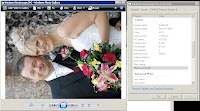
Mac here is displaying the same image, no surprises, everything works fine and I get a useful indication of the orientation data. Interestingly detected as TIFF data, which is what could be throwing Windows. Mind you, the Mac works whatever you throw at it.

Ubuntu does an excellent job of interpreting the orientation data.

My conclusion is possibly a tad extreme, but I don't think I could trust any version of Windows to give me consistent results in the realm of photography.
To be fair to Windows the fault probably lies with Fujifilm, except this does not explain why OSX and Ubuntu seem to work fine with every image I have thrown at them from many cameras. The issue can be sorted out by editing the orientation tag with a windows application.
The camera can rotate images by changing the exif data within the photo to say what orientation it was taken. This manual setting is set to 0, or 90 degrees so that when it is opened and edited it is the right way up. this ensures that the quality of the picture is the best, since the file does not have to be rotated and re-saved. Unfortunately Windows seems to completely ignore the orientation of the image.
Vista presents this portrait as a landscape, if I rotate the graphic and re-save it, it will open incorrectly on computers that understand orientation properly. Besides quality will be lost if I do this with a jpeg, since every time you save a jpg you get one generation loss of quality like ye olde video tapes.

Windows 7 shockingly still has this bug.

Mac here is displaying the same image, no surprises, everything works fine and I get a useful indication of the orientation data. Interestingly detected as TIFF data, which is what could be throwing Windows. Mind you, the Mac works whatever you throw at it.

Ubuntu does an excellent job of interpreting the orientation data.

My conclusion is possibly a tad extreme, but I don't think I could trust any version of Windows to give me consistent results in the realm of photography.
To be fair to Windows the fault probably lies with Fujifilm, except this does not explain why OSX and Ubuntu seem to work fine with every image I have thrown at them from many cameras. The issue can be sorted out by editing the orientation tag with a windows application.
Subscribe to:
Posts (Atom)